User:JMyles/You can't spell 'copyright' without 'cop'
You can't spell 'copyright' without 'cop'
Work-in-progress
At their core, the only thing that so-called 'intellectual property' laws actually do is allow us to call the cops on our fans, and that's something no musician wants to do.
It bears repeating: copying is the most fundamental process of the propagation of life in the universe. Whatever else life is, ```life is copying```. Evolution in particular is the result of a long series of inexact copies - remixes, we might say.
It is no surprise that the instinct of power hunger that we all have (yes, you too, and your favorite musician too) produces as one of its outlets the vulgar and odious observation: "hey, if I could get in the middle of the copying process - if I could harness this fundamental process of the universe by inserting myself into the copying mechanism of the human condition - if I could just get a piece of that - I'd be rich."

Deep in the western mythical milieu, we find the confounding of copying with theft - it's one of the most normative pieces of propaganda to be found in the subtleties of nearly every polite and official discussion of the plight of the musician and filmmaker. The myth of wikipedia:Prometheus, even on WikiPedia with its deadhead and Creative Commons roots, still says, "He defied the Olympian gods by stealing fire from them and giving it to humanity."
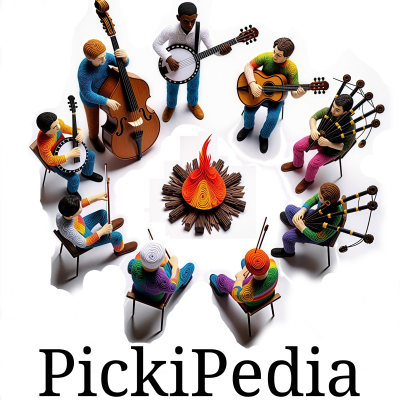
Let's say something simple about fire: if you step up to a roaring bonfire and hold your torch in its flames until it is lit, and then walk away with your now-burning torch, you have not stolen anything from the bonfire. And indeed the proclivity of fire to copy itself onto available fuel is one of its most alluring and attractive features; it's no coincidence that this is also one of the quintessential venues for our own copying of knowledge between our minds, for so many of us have taken the time to teach each other how to play Salt Creek around a campfire.
The sins of Prometheus, in the eyes of the gods, had nothing to do with his having taken anything from them, but in his elucidation to humankind that they can be the beneficiaries of free culture. In some sense, what Prometheus brings us is the dawn of the traditions of DRM-free and Creative Commons publishing. And this is so threatening to the power brokers in society that their vengeance takes the form of gruesome torture - by most accounts, it's Zeus himself who ties Prometheus to a rock to have his liver viciously consumed by an eagle, only to have it grow back each day so that the torment can repeat.
But here too is a subtle feature of the power of copying: that Prometheus is indisposed to be tortured endlessly does not change our use of fire, for once he gave it to us, we immediately gained the power to copy it ad infinitum. The same is true of the basic function of the internet: once our network interface copies a thing of beauty from another place, the source is no longer needed for us to share it with friends. This basic property of the internet is its strongest assurance that independent music can thrive, and that it is a place where, in time and with coordination among us, we can wrest control of our art from the predatory industries grasping so hard to keep themselves in the middle of our work.
From DNA to Reuben's Train, beauty propagates through the universe by copying. And from Monsanto to the RIAA, rent-seekers attempt to inhibit this propagation by jamming the blunt instrument of state violence into its machinery.
In so doing, these entities not only "break the net" as John Perry Barlow put it, they side with censorship and violence, and cast onto our internet what it can only perceive as disease and death. They are the childish vindictive gods to our

